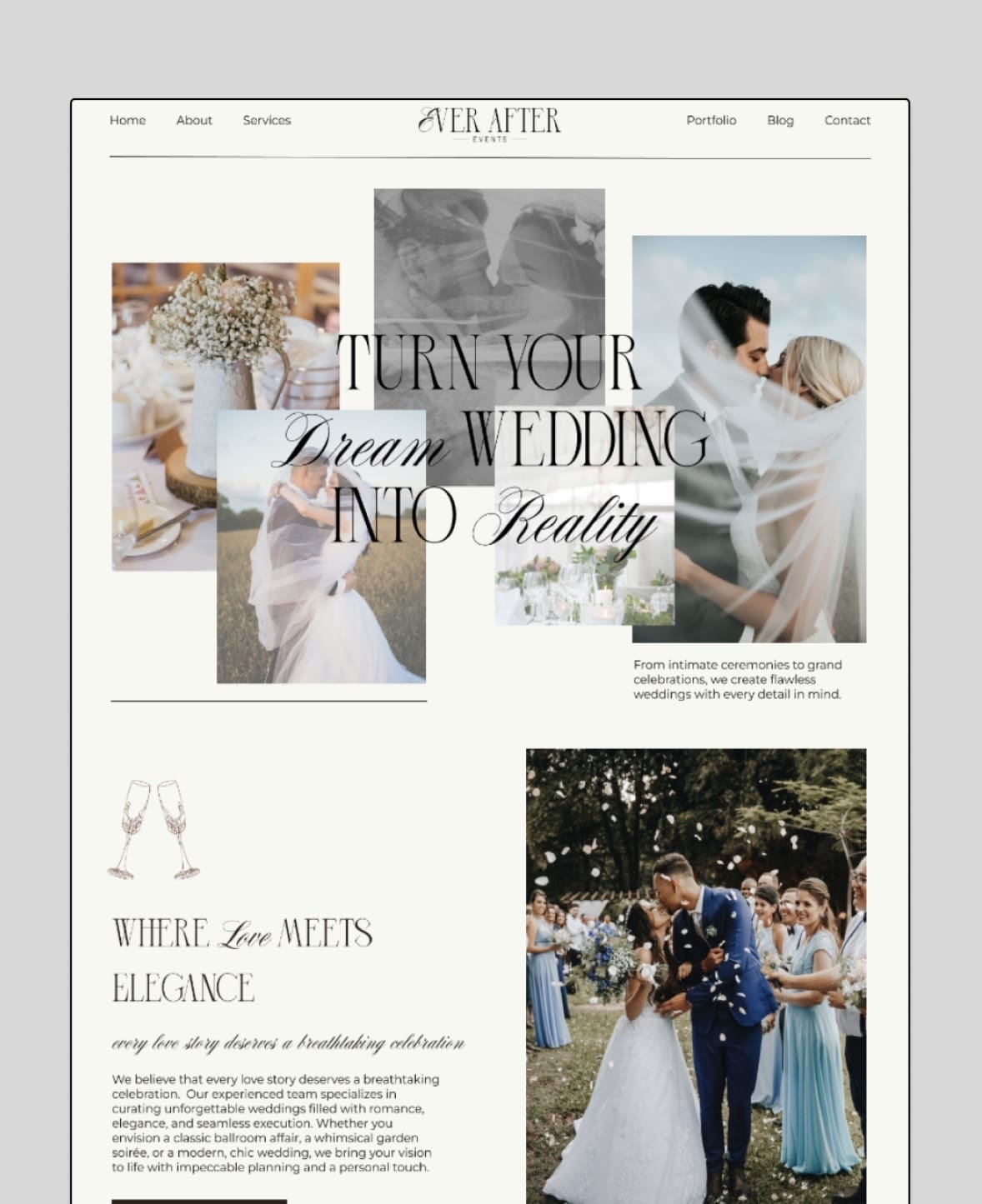


There is a belief I see often in the wedding photography industry.
If a website looks beautiful, it should automatically bring inquiries.
And I completely understand why that feels true.
Photography is a visual industry. Your work is visual. Your portfolio is visual. So it makes sense that the website becomes an extension of that visual storytelling.
But in reality, design alone does not create enquiries.
It creates attention, yes. But enquiries come from something deeper: clarity, trust, and direction.
Over the years working with photographers on both website design and SEO, I have noticed the same pattern again and again. Beautiful websites that look complete on the surface, but quietly struggle when it comes to consistent conversions.
Not because the work is not strong. Not because the brand is not clear. But because the website is not always structured in a way that supports decision-making.
And this is where strategy becomes just as important as aesthetics.
I first started noticing this more clearly after deepening my SEO knowledge through the Moz certification. Before that, I approached websites mostly from a design perspective. I focused on layout, visuals, and user experience.
But SEO forced me to think differently.
It made me look at how people actually move through a website. What they need to see. What questions they are trying to answer. And what makes them feel confident enough to enquire.
Because in the wedding industry, people are not just booking a service.
They are choosing someone they trust to document one of the most important days of their lives.
That decision is rarely visual alone.
It is emotional, yes, but also highly practical.
And your website has to support both.
Table of Contents
1. Beautiful design vs strategic design
2. The portfolio-first mistake
3. When design comes first but SEO comes later
4. Why messaging matters more than visuals
5. Understanding inquiry psychology
6. Why templates alone are not enough
7. Do beautiful websites help SEO?
8. Frequently asked questions
9. Final thoughts
1. Beautiful design vs strategic design
A beautiful website gets attention.
A strategic website turns attention into enquiries.
The difference between the two is not always obvious at first.
Many photographers invest in websites that feel visually aligned with their brand. The imagery is strong. The layout is refined. The experience feels premium.
But when we look deeper, the user journey is often unclear.
Visitors land on the site, scroll through the portfolio, and leave without fully understanding what makes that photographer different or who they are best suited for.
That gap is where enquiries are often lost.
2. The portfolio-first mistake
One of the most common patterns I see is the portfolio carrying too much weight on its own.
Which is understandable because photography is visual by nature.
But websites still need structure and written context.
Because people are not just looking at images. They are trying to understand experience, personality, and fit.
They want reassurance before they enquire.
And without enough supporting messaging, even strong visuals can fall short of converting visitors into enquiries.
This is also where blogging and SEO content play a bigger role than many photographers realise.
They help create context around your work and guide people who are actively searching for what you offer.
I talk more about these foundational website issues in 5 common website mistakes wedding photographers make and how to fix them.
3. When design comes first but SEO comes later
One of my recent clients, Sophie, is a good example of how this balance plays out in real life.
When we first worked together, her main focus was her website redesign.
Budget wise, it made sense to prioritise design at that stage of her business.
She was already receiving inquiries through word of mouth and referrals, so the goal was to elevate her online presence and create a website that finally reflected the quality of her work.
We still included foundational SEO within her project, but the main emphasis was on design, structure, and user experience rather than long-term content growth.
After launch, the difference was immediate in terms of perception.
The website felt more aligned with her brand, and enquiries that did come through converted well because the experience was clear and intentional.
But over time, another limitation became obvious.
There was very little organic traffic coming into the website.
The website worked well when people arrived, but it was not being discovered consistently in search.
That is when SEO and blogging became the next logical step.
Not because the website was not working, but because visibility had not yet been fully built out.
And this is a very common stage for photographers who invest in design first.
4. Why messaging matters more than visuals
Strong visuals attract attention, but messaging is what helps people decide whether to enquire.
And this is where many photography websites unintentionally stay too vague.
They show the work clearly but do not always explain:
- who the photographer is for
- what type of weddings they specialise in
- what the experience feels like
- how the process works
Without that clarity, visitors are left to interpret everything themselves, which often slows down decision-making.
When messaging is clearer, people move through the website with more confidence because they understand whether they align with the service or not.
5. Understanding inquiry psychology
Inquiry decisions are rarely made logically first.
People are trying to imagine themselves in the experience.
They are asking internal questions like:
- Do I feel comfortable with this person?
- Do they understand the type of wedding I want?
- Can I trust them with something this important?
This is where website structure becomes important.
If the journey feels fragmented or unclear, people often leave before enquiring, even if they like the work.
On the other hand, when the experience feels structured and intentional, it becomes much easier for visitors to take the next step.
I explore this further in 4 luxury photography website examples that inspire connection and conversion.
6. Why templates alone are not enough
Website templates can be a helpful starting point, especially on platforms like Showit.
They provide a visual structure and save time in the design process.
But they do not define strategy.
Because conversion depends on how the website is customised, how the messaging is written, and how the pages are connected together.
A template can look beautiful and still not convert if the underlying structure does not support user decision-making.
If you are exploring template ideas, I also share some recommendations in top 5 Showit templates photographers will love in 2026.
7. Do beautiful websites help SEO?
Beautiful design supports user experience, and user experience is part of SEO.
But SEO itself relies heavily on structure, written content, internal linking, page relevance, and how clearly your website communicates what you do.
So while design helps people stay on your site longer, it is not enough on its own to create visibility in search.
Both design and SEO need to work together for long-term results.
8. Frequently asked questions
Why is my website not converting?
Most photography websites do not convert because they rely heavily on visuals without enough messaging, structure, or guidance to help visitors understand the next step.
What makes a photography website convert?
A converting website combines strong visuals with clear messaging, structured user journeys, emotional clarity, and easy ways for visitors to enquire.
Do beautiful websites help SEO?
They support SEO indirectly through better user experience, but SEO performance depends more on content, structure, internal linking, and keyword relevance.
9. Final thoughts
A beautiful website is a strong foundation.
But it is not the full system.
The photographers who see consistent enquiries are the ones who combine design, messaging, SEO, and structure into one connected experience.
Because ultimately, a website should do more than look good.
It should help the right people understand you, trust you, and feel confident enough to enquire.

