
When I moved from graphic design to branding and eventually into website design, I noticed a consistent problem.
Photographers had beautiful websites.
Stunning images. Emotional galleries. Thoughtful copy. A brand that finally felt like them.
But very few of those websites were actually visible on Google.
And that was the part that stayed with me.
Because what is the point of having a beautiful website if the right people cannot find it?
This made me realise that a beautiful website alone is not enough. Visibility matters too. And that is where SEO comes in.
I started learning SEO because I wanted the websites I designed to be technically optimised from the start. But I quickly realised SEO is much more than just adding a few keywords to a page.
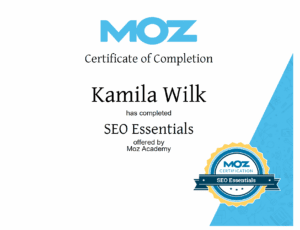
To understand it properly, I completed the Moz SEO Certification and began analysing website performance using Google Analytics, Google Search Console, Microsoft Clarity, and Ubersuggest.
Now, SEO is part of how I think about websites from the beginning.
Because a photography website should not just look beautiful.
It should be clear, strategic, easy to use, and easier for the right people to find.
Table of Contents
- Why SEO Matters for Wedding Photographers
- My Approach: Design, Marketing and SEO
- Common SEO Mistakes Photographers Make
- How SEO Works for Photography Websites
- Keyword Research for Wedding Photography SEO
- Website Structure and Navigation for SEO
- Google Business Profile for Photographers
- Why Ranking for Your Business Name Matters Too
- Blogging for SEO Wedding Photography
- Image SEO for Photographers
- SEO Tools Every Photographer Should Know
- Real SEO Examples From Photographer Websites
- How Long SEO Takes
- Instagram vs Google
- Practical SEO Tips
- FAQ: SEO for Wedding Photographers
- Ready to Improve Your Website SEO?
Why SEO Matters for Wedding Photographers
Instagram is often the main marketing platform for photographers.
And I understand why.
It is visual, creative, and perfect for showing your work. You can share galleries, behind-the-scenes moments, client stories, reels, and personality.
But Instagram moves fast.
A post might get likes and comments for a few hours, and then it disappears into the feed. Visibility depends on algorithms, timing, consistency, and whether your content is actually shown to the right people.
Google works differently.
When someone searches for a photographer on Google, they are usually looking with more intent.
They might be searching for a wedding photographer in Derbyshire, a documentary wedding photographer in Manchester, or a wedding photographer in Los Angeles.
They are not just scrolling.
They are actively looking.
And that is what makes SEO so powerful.
Ranking for the right searches means your website can appear at the exact moment someone is looking for what you offer.
But this is also where a lot of photographers get frustrated.
You can have a beautiful website and still not rank.
You can have emotional copy and still not rank.
You can have stunning galleries and still not rank.
That does not mean your work is not good enough.
It usually means Google does not have enough clarity yet.
When I look at a photographer’s website, I am not only asking whether it looks beautiful.
I am asking whether Google can understand what the photographer offers, where they are based, which locations they serve, which pages matter most, and whether someone landing on the website knows what to do next.
This is where my background in website design matters.
SEO is not separate from design.
If the structure is confusing, the headings are too vague, or the website looks beautiful but does not clearly explain what the photographer does, it can struggle to rank and convert.
That is why I see SEO for wedding photographers as more than a technical task.
It is a clarity task.
My Approach: Design, Marketing and SEO
When I work on SEO for photographers, I naturally look at three things together: design, marketing, and SEO.
Keep the Design, Marketing, and SEO sections underneath, including all your platform links and the Dream Client Website Checklist.
Design
I build websites on platforms like Showit, Webflow, Wix, Squarespace, and Shopify.
Choosing the right platform matters because it can affect performance, flexibility, page speed, and how easily your website can grow with your business.
If you’re wondering which website platform is best for photographers, I’ve done the comparisons so you don’t have to:
Still unsure which platform fits your style, workflow, and SEO needs? Take my Which Website Platform is Right for You? Quiz to find out in a few minutes.
Marketing
With a BA in Marketing, I understand how people search, what drives clicks, and how websites guide visitors toward making enquiries.
Because SEO is not only about traffic.
It is also about what happens after someone lands on your website.
If someone finds you on Google but your website feels confusing, slow, or unclear, they may leave without enquiring.
That is why I care about the full journey.
How someone lands on the site.
What they understand first.
How they move through the pages.
And what makes them feel confident enough to get in touch.
And this is why I do not see SEO as separate from the rest of your marketing. Your website, Instagram, Google presence, client journey, and content all work together. If you want to look at the bigger picture beyond SEO, I also wrote about marketing for wedding photographers.
SEO
SEO is not an afterthought.
When I optimise a photographer’s website, I look at the full picture rather than one isolated task.
This can include an SEO audit, competitor research, keyword research, technical SEO fixes, metadata, heading structure, broken links, schema, image alt text, natural copy improvements, Google Business Profile alignment, and a final report with next steps.
Because sometimes the issue is not just one thing.
Sometimes the keywords are wrong.
Sometimes the metadata is missing.
Sometimes the website has technical issues.
Sometimes the blog is attracting people, but not the people who are actually looking to book.
That is why the strategy has to come before the changes.
If you’re planning a website redesign, my Dream Client Website Checklist covers the key elements every photography website should include to attract the right clients.
Common SEO Mistakes Photographers Make
Most photography websites do not struggle because the work is bad.
They struggle because the website is not giving Google enough clear information.
Some of the most common issues I see are large image files, default file names, missing metadata, broken links, unclear headings, confusing navigation, and blog content that does not support the services the photographer actually wants to book.
Large images are especially common for photographers.
And I get it.
Your images are your work. You want them to look beautiful.
But if they are too large, they can slow your website down, which affects both user experience and Google rankings. You can test your site speed using Google PageSpeed Insights.
Another mistake I see is choosing keywords based on what sounds relevant, rather than looking at what people are actually searching for.
This was something I worked through with Sophie from Nostalgia Photography.
The location she had originally focused on made sense geographically, but there was almost no search demand for it.
That did not mean the location was unimportant to her business. It just meant it was not the strongest keyword focus for the website.
So instead of forcing that phrase into the copy, I looked at the areas Sophie genuinely worked in that people were already searching for.
We shifted the focus towards Derbyshire, the Peak District, and Staffordshire. I then updated the website copy so those locations were included naturally, rather than repeating them in every section.
I also added schema, location-focused alt text, and clearer local relevance across her portfolio pieces.
The aim was not to make the website sound like it had been written for Google.
It was to make the website clearer for everyone.
Google could better understand what Sophie offered and where she worked, while potential clients could see the areas she actually photographed in.
The lesson is not to always choose the keyword with the biggest search volume.
It is about finding the balance between search demand, competition, relevance, and the type of work you actually want to book.
The answer is not to add more keywords everywhere.
It is to make sure every important page has a clear purpose and reflects your real business.
How SEO Works for Photography Websites
SEO can feel complicated, but most photography websites improve by focusing on a few core areas.
Keyword research helps you understand what people are actually searching for.
Website structure helps Google understand what each page is about.
Blog content helps build authority over time.
Image optimisation helps your website load faster and gives Google more context.
Internal linking helps connect important pages together.
But the way those things are used should depend on the website.
A newer website with no blog content will need a different strategy from an established website that already has authority.
A photographer in a smaller location will have different opportunities from someone trying to rank in a highly competitive city like London, Manchester, Los Angeles, or New York.
This is why I always look at the website first.
Not every photographer needs the same SEO plan.
Keyword Research for Wedding Photography SEO
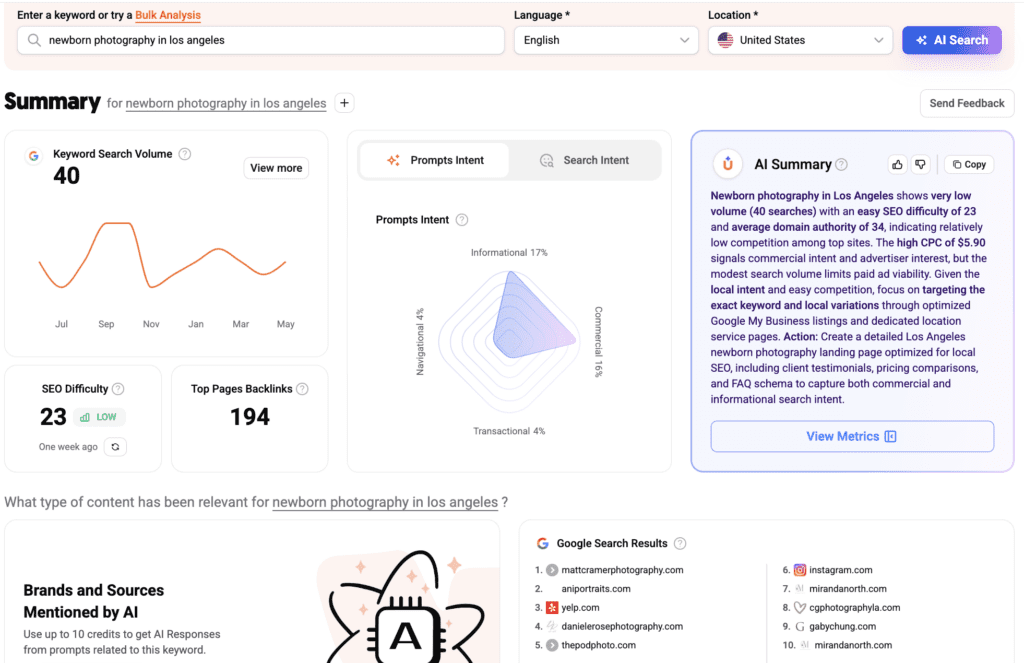
Keywords are simply the phrases people type into Google when they are looking for something.
But keyword research is not about finding one phrase and repeating it across your entire website.
It is about understanding what your potential clients are searching for, then choosing the right focus for each page.
A UK-based photographer might need to focus on county, town, or venue-based searches.
A US-based photographer might need to think more carefully about city, neighbourhood, county, and service-specific searches, especially in competitive areas like Los Angeles.
For example, a photographer in LA may not only want to target “Los Angeles photographer”.
That is very broad.
It may be more useful to look at searches connected to a specific service and area, such as newborn photography in Los Angeles, maternity photography in Redondo Beach, South Bay family photographer, or beach maternity photos in LA.
I use Ubersuggest to track keywords, check search volume, and understand how a website is moving over time.
It helps me see which keywords are appearing, which positions are changing, and whether the website is starting to show up for the right searches.
For more keyword inspiration tailored specifically to wedding photography, check out 5 SEO Keywords Every Wedding Photographer Should Target.
How I choose keywords for photographer websites
When I look at keywords for a photographer, I do not just look for the biggest keyword.
I look at what is realistic for the website right now.
For Sophie, her original focus was too close and too specific. It made sense as a local area, but it had 0 monthly searches. So instead, I shifted the keyword strategy towards locations people were actually searching for and that Sophie already worked in, including Derbyshire, the Peak District, and Staffordshire.
Then I updated the website copy so those locations were included naturally.
Not forced.
Not repeated in every sentence.
Just placed where they actually made sense.
I also added schema, location-focused alt text, and clearer location relevance across portfolio pieces.
After around a week, Sophie started ranking for Peak District-related searches. A couple of weeks later, “wedding photographer Derbyshire” appeared in Ubersuggest.
It is still lower down, but it matters because the page was not ranking for that keyword at all before.
And that is the part I think photographers need to understand.
Early SEO progress is not always jumping straight to page one.
Sometimes the first sign is Google finally connecting your website with the right service and location.
With the LA-based baby and family photographer, the keyword research looked different because the website already had more authority and content.
The issue was not starting from nothing.
The issue was that some existing blog content was bringing in broader lifestyle, parenting, or local resource searches rather than searches with stronger photography booking intent.
So the strategy became more focused on searches connected to newborn photography, maternity photography, family photography, Los Angeles, Redondo Beach, and South Bay locations.
That is why keyword research is not only about search volume.
It is about relevance.
It is about intent.
And it is about choosing keywords that match the stage your website is actually at.
Website Structure and Navigation for SEO
Search engines prefer websites that are easy to navigate.
And honestly, so do people.
A simple photography website might include Home, Portfolio, About, Blog, and Contact.
But if you offer specific services, your website may need more than that.
If wedding photography is your main service, it should have its own clear page.
If you also offer family photography, branding photography, newborn photography, or mentoring, those services should not all be hidden inside one vague page.
Google needs to understand what each page is about.
A wedding photography page, family photography page, newborn photography page, and maternity photography page all have different search intent behind them.
If they are all squeezed into one general services page, it becomes harder for Google and potential clients to understand what matters most.
This is where website design and SEO overlap the most.
A photographer’s website can look minimal and elegant, but if the structure is too vague, both Google and potential clients can get lost.
Internal linking also helps.
If you write a blog post about a Derbyshire wedding venue, it should link back to your wedding photography page.
If you publish a newborn session guide for Los Angeles parents, it should link back to your newborn photography service page.
If your SEO service page talks about SEO for photographers, it should link to this guide using clear anchor text, such as “SEO for wedding photographers guide”. In the same way, this post should link back to your SEO services for wedding photographers page so readers can move from learning about SEO to getting support with it 😉
Google Business Profile for Photographers
Your website is not the only place Google looks for local information.
Your Google Business Profile, social media, directories, reviews, and website all help create a clearer picture of who you are, what you offer, and where you work.
The important thing is consistency.
With both Sophie and the LA-based photographer, their profiles were already set up well.
The important thing was making sure the profile, website, locations, and services were all working together.
For photographers, the profile needs to make the basics clear: where you are based, what type of photography you offer, which areas you serve, and whether the images and reviews support the same story as your website.
You do not need to overcomplicate this.
But if your website says you are a wedding photographer in Derbyshire, your Google Business Profile should support that same message.
The same applies if you are a maternity photographer in Los Angeles, a newborn photographer in Redondo Beach, or a family photographer in the South Bay.
Your website and Google Business Profile should not feel disconnected.
Google is looking for consistency.
Your service, location, images, reviews, and website content should all be pointing in the same direction.
Why ranking for your business name matters too
Local SEO is not only about ranking for keywords like “wedding photographer in Derbyshire” or “maternity photographer in Los Angeles”.
It is also about making sure people can find the right version of you.
This is something I have seen happen more than once with photographers.
Before Sophie’s rebrand, she was not ranking clearly for her previous business name. There was another Sophie with the same name and middle name who also worked in photography, and people started leaving reviews for the other Sophie on Sophie’s Google Business Profile.
That kind of confusion matters.
Because if Google, clients, and review platforms are not completely clear on who you are, it can affect how people find you and how much they trust what they see.
The rebrand helped fix this by making Sophie’s business identity clearer and more distinct. It gave the website, Google Business Profile, and brand name a stronger foundation to work from.
The LA-based photographer had a similar issue before we started working together. She had already spent time improving her Google Business Profile herself and asked me lots of questions about it before the SEO work began.
In her case, there was another photographer with a very similar name, but in a different photography space. My client had “Studio” connected to her brand and URL at one point, but somewhere along the line that consistency had dropped.
So one of my recommendations was to make sure the brand name stayed consistent across the website, Google Business Profile, social media, directories, and anywhere else the business appeared online.
This is why brand consistency matters for SEO.
If your website says one version of your name, your Google Business Profile says another, and your social media or old links say something slightly different, it can create confusion.
And confusion is exactly what we want to avoid.
Ranking for your own business name might sound basic, but it is important. It helps clients find the right photographer, land on the right website, and leave reviews in the right place.
Because SEO is not only about being found for service keywords.
It is also about being found correctly.
Blogging for SEO Wedding Photography
Blogging can help photographers appear for more searches, but only when each post has a clear purpose.
A post with 80 images and two sentences might look beautiful, but it does not give Google much context about the wedding, venue, location, or service.
Google needs to understand what the post is about, who it is useful for, and how it connects to the photography services you offer.
Blog content can also become too broad if you are writing about anything that feels vaguely connected to your audience.
With the LA-based photographer, the website already had a lot of blog content, which helped build authority. But not all of that content was equally connected to photography booking intent.
Some blog posts were more focused on local resources, parenting, wellness, or lifestyle topics. These can be useful for the audience, but they do not always help Google understand the main commercial services as clearly as photography-focused content would.
That is why, in her SEO report, I recommended a stronger balance moving forward: more photography-focused content, supported by some lifestyle and community content.
For a wedding photographer, this might mean writing real wedding stories, venue guides, engagement shoot location posts, or helpful wedding planning content.
For a family, newborn, or maternity photographer in the US, this might look like session preparation guides, what to wear for maternity photos, newborn photography pricing guides, beach maternity photo locations in Los Angeles, or what to expect during a newborn session.
The point is not to blog constantly just for the sake of it.
The point is to create content that supports the services you actually want to book.
For Sophie, this is the next stage.
Her website currently has 0 blogs, so we are still building authority. We are working on expanding her case studies and, hopefully, adding blog content in the future, because Google needs more content to understand her locations, services, and experience.
For inspiration on what to blog about, check out 5 Blog Post Ideas That Boost SEO for Wedding Photographer Websites.
Interactive content, such as quizzes or guides, can further engage visitors and keep them exploring your site longer.
Image SEO for Photographers
Images play a huge role in a photography website, but they still need useful context.
Especially when so much of your work is shown through images.
Before uploading an image, think about its file name, file size, format, and alt text.
These things can support accessibility, page performance, image search visibility, and the overall experience for visitors.
But image SEO is not just about adding keywords to alt text.
It is about giving Google more context while still describing the image naturally.
For Sophie’s SEO optimisation, I added more location-focused alt text and made sure the portfolio pieces gave clearer local context. That matters because her website is trying to build relevance around areas like Derbyshire, the Peak District, Staffordshire, and the High Peak.
A weak file name would be IMG_2849.jpg.
A stronger file name would be peak-district-wedding-photographer-couple-portraits.jpg.
Weak alt text would be wedding photographer wedding photography best wedding photographer UK.
That sounds forced and does not help the user.
A stronger version would be: Couple portraits in the Peak District countryside after a relaxed Derbyshire wedding ceremony.
That describes the image properly while still giving Google useful information about the service and location.
The same applies to US photographers.
Instead of uploading a file called DSC_1029.jpg, a newborn photographer in LA could use something clearer, such as los-angeles-newborn-photography-studio-session.jpg.
The goal is not to over-optimise every image.
The goal is to stop missing easy context.
SEO Tools Every Photographer Should Know
These tools help you track performance, identify opportunities, and make improvements:
- Google Analytics
- Google Search Console
- Microsoft Clarity
- Ubersuggest
- Google PageSpeed Insights
Monitoring your site regularly allows you to make informed decisions and improve rankings over time.
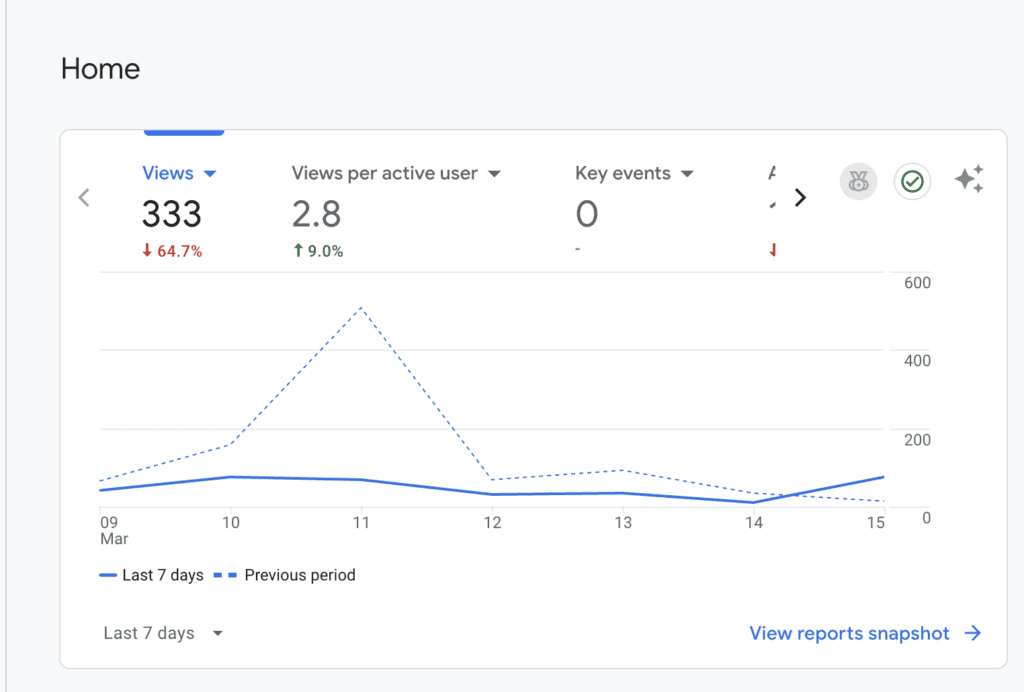
The tool I use to track keyword movement is Ubersuggest.
This helps me see which keywords are appearing, which positions are changing, and whether the website is starting to move in the right direction.
For Sophie, this was important because the website started from a newer position with less authority and no blogs. Seeing “wedding photographer Derbyshire” appear at position 85 still mattered because it showed that Google was beginning to connect the website with that service and location.
For the LA-based photographer, Ubersuggest showed a much faster impact because the website already had more authority. Within one to two weeks, 19 keywords moved up, and at the time of writing, 32 keywords had improved in position.
This is why I do not only look at whether a website is ranking number one immediately.
I look at movement.
Are new keywords appearing? Are the right pages ranking? Are the wrong keywords becoming less of the focus? Are enquiries starting to come through the website?
SEO is usually a series of small signals before it becomes a big visible result.
Real SEO Examples From Photographer Websites
SEO results can look very different depending on the website.
This is why I never treat SEO as one generic checklist.
A newer website with no blog content is not starting from the same place as an established website with years of content, existing rankings, and more authority.
The strategy has to match the website, the business, the location, and what Google already understands.
Sophie’s wedding and lifestyle photography website
With Sophie’s website, we first started with a rebrand.
Her website needed to feel more aligned with the clients she wanted to attract, so the first stage was making the design, structure, and overall experience feel clearer and more intentional.
You can view the redesign here: Sophie’s Showit website redesign for a wedding and lifestyle photographer.

After the redesign, Sophie provided her own copy. The copy followed basic SEO fundamentals, but the website still was not ranking the way she hoped.
So she came back to me for SEO optimisation.
When I reviewed the site, the issue was that the keyword strategy needed to be more intentional.
Before the optimisation, Sophie was focusing on a closer location that had 0 search volume. It made sense geographically, but if people are not actually searching for that phrase, it is much harder to build visibility from it.
So instead, I shifted the strategy towards locations people were actually searching for and that Sophie already worked in, including Derbyshire, the Peak District, and Staffordshire.
Then I updated the website copy so those locations were included naturally. I also added schema, location-focused alt text, and more location relevance across portfolio pieces.
After the SEO optimisation, Sophie started ranking first for her own name. She also began appearing for “High Peak wedding photographer” at position 39, and a new keyword appeared in Ubersuggest: “wedding photographer Derbyshire” at position 85.
This is not a top 10 ranking yet.
But it is progress.
Her website is newer, she currently has 0 blogs, and Google has less authority to work with. So seeing new location-based keywords appear after the optimisation is a positive sign that Google is beginning to understand the website better.
Sophie also mentioned that she has been busier with clients and that people are now contacting her through her website form. Before the redesign and SEO optimisation, enquiries were coming more through Instagram or other social platforms.
We are still working on the website, so this is not the end of the SEO work. The next stage is expanding her case studies and, hopefully, adding blog content in the future so Google has more content to understand her locations, services, and experience.
Baby and family photographer in the LA area
Another client, a baby and family photographer in the LA area, came to me with a very different starting point.
She already had an established website, a stronger content base, and more authority.
The issue was not that Google could not find her website.
The issue was that she was ranking for the wrong keywords, or ranking lower than she should for the searches that actually mattered.
Some of the existing content was attracting searches around couples, local lifestyle topics, or general resources. But those searches did not always mean someone was looking to book newborn, maternity, or family photography.
That is why the strategy needed to shift towards stronger booking intent.
For this website, the SEO work included an audit, competitor research, keyword research, technical SEO fixes, metadata updates, heading structure improvements, broken link and URL checks, image alt text improvements, natural keyword implementation, schema where relevant, and content strategy recommendations.
The keyword strategy became more focused on searches connected to newborn photography, maternity photography, family photography, Los Angeles, Redondo Beach, and South Bay locations.
Because this website already had more authority, the movement was quicker than Sophie’s newer website.
During the first one-to-two-week tracking period, 19 keywords moved up. At the time I reviewed the wider keyword movement, 32 keywords had improved in position.
I would not treat those rankings as fixed forever, because keyword positions naturally change. But they were useful because they showed the SEO work was moving the website in the right direction.
For example, some of the improvements were around searches connected to infant photography in Los Angeles, newborn photography pricing, newborn packages, and Redondo Beach photography. These were much closer to the services she wanted to book than the broader lifestyle or local-resource searches the website had been attracting before.
That was the important part.
Not just that rankings moved, but that the website started moving towards searches with stronger photography booking intent.
This is why SEO results are not the same for every photographer.
Sophie’s website is newer, has no blogs yet, and is still building authority.
The LA-based photographer already had a stronger foundation, so once the technical issues and keyword direction were improved, Google had more existing signals to work with.
Neither result is better or worse.
They are just different starting points.
How Long SEO Takes
SEO is a long-term strategy.
Most websites start seeing noticeable improvements within three to six months.
Usually, the first stage is technical fixes, keyword research, and on-page optimisation.
Then Google starts processing the updated content.
Then, over time, rankings, traffic, and enquiries can begin increasing more consistently.
But not every website moves at the same speed.
An established website with existing authority, blog content, and keyword history can often respond faster to SEO changes.
A newer website usually moves more slowly because Google is still learning what the website is about.
That is why Sophie’s website and the LA-based photographer’s website moved differently.
Sophie’s website is newer and currently has 0 blogs, so early movement looked like branded ranking, new location keywords appearing, and gradual progress.
The LA-based photographer had an established site, so after the technical fixes and keyword updates, the ranking movement was quicker.
So when I look at SEO results, I do not only ask, “Are we number one yet?”
I ask whether the right keywords are starting to appear, whether rankings are moving in the right direction, whether Google is understanding the service and location more clearly, and whether better enquiries are coming through.
Because rankings matter.
But enquiries matter too.
Instagram vs Google
Both Instagram and Google are important.
But they serve different purposes.
Instagram showcases your work and builds trust with potential clients.
Google helps new clients discover your website when they are actively searching for a photographer.
Using both together creates a stronger marketing strategy than relying solely on one platform.
Instagram can help people connect with you.
But Google can help people find you in the first place.
If you want to look at the bigger picture beyond SEO, I also wrote a guide on marketing for wedding photographers.
Practical SEO Tips
Here’s where I would start if you want to improve your SEO as a photographer.
First, check whether your website is clear.
Can someone understand what you do, where you work, and how to enquire within the first few seconds of landing on your site?
Then check the SEO basics.
Image size. Image file names. Page titles. Meta descriptions. Headings. Navigation. Internal links. Google Business Profile. Blog content.
But more importantly, check whether those things are supporting the services you actually want to book.
Because SEO is not just about doing more.
It is about making the website clearer, more useful, and more connected to the way people are actually searching.
Finally, look at what is actually happening.
Are the right keywords appearing in Ubersuggest? Are people clicking through from Google? Are they staying on the website? Are they completing your enquiry form? Are enquiries coming from your website instead of only Instagram or referrals?
Consistency matters.
But intentional consistency matters more.
FAQ: SEO for Wedding Photographers
How long does SEO take to work?
It depends, but most websites start seeing more noticeable improvements within three to six months. Established websites can sometimes move faster because they already have authority, blog content, and keyword history. Newer websites can still make progress, but it usually takes longer because Google is still learning what the website is about.
Do photographers need a blog?
Blogging helps photographers rank for additional keywords and attract more search traffic. A website can still make progress without a blog, but blog content helps build authority over time, especially for venue searches, location guides, real weddings, and wedding planning questions.
Does Instagram help SEO?
Instagram does not directly impact Google rankings, but it can drive traffic to your website and help people build trust with your brand. Google and Instagram work best when they support each other instead of replacing each other.
Which platform is best for photography websites?
Platforms like Showit, Webflow, Squarespace, Wix, and Shopify can work for photographers depending on your needs. The best platform depends on your design style, workflow, SEO needs, and how much flexibility you want.
Do I need a custom website to rank on Google?
You do not always need a custom website to rank on Google, but custom design can help with proper site structure, faster load times, clearer navigation, and stronger SEO foundations. The most important thing is that the website is clear, easy to navigate, technically sound, and built around the right keywords.
How often should I update my blog for SEO?
You do not need to blog constantly, but consistency helps. Aim for strategic posts that support the services you actually want to book. This could include real weddings, venue guides, location-based posts, preparation guides, pricing guides, or helpful questions your potential clients are already searching for.
Can I do SEO myself, or should I hire a designer?
Basic SEO can be learned, especially things like renaming images, writing blog posts, and improving page titles. But a designer with SEO experience can help with technical best practices, website structure, metadata, page hierarchy, schema, and avoiding mistakes that can hurt rankings.
Why is my photography website ranking for the wrong keywords?
Your website may be ranking for the wrong keywords if your content is not clearly connected to the services you want to book. For example, local lifestyle or parenting blog posts may build audience trust, but they may not always attract people who are ready to book photography. This is why keyword research and content alignment matter.
What should I do if my target keyword has no search volume?
If a keyword has no search volume, it may not be the best main focus for your SEO strategy. It might still be worth mentioning naturally if it is relevant to your business, but your main keyword should usually be something people are actually searching for. With Sophie’s website, I shifted the strategy away from a very close location with 0 searches and towards locations she already worked in that had stronger search demand.
Why do established photography websites rank faster than new websites?
Established websites often have more history, blog content, authority, backlinks, and existing keyword data. That gives Google more information to work with. Newer websites can still make progress, but it usually takes longer because Google is still learning what the website is about.
What do you actually change during SEO optimisation?
Depending on the website, I may work on keyword research, competitor research, metadata, headings, copy, image alt text, schema, internal links, broken links, URL issues, Google Business Profile alignment, and content strategy. The goal is to make the website clearer for both Google and potential clients.
Can SEO help photographers get more enquiries?
Yes, but only if the website is also designed to convert. SEO can help more people find your website, but your copy, images, structure, and contact process need to help visitors trust you enough to enquire.
Ready to Improve Your Website SEO?
If your website looks beautiful but is not bringing in the right enquiries, I can help you understand what might be getting in the way.
My SEO services for wedding photographers combine keyword research, website structure, technical SEO, content strategy, and conversion thinking.
I do not believe in applying the same checklist to every photographer.
I look at where your website is now, what you want to be known for, and what your ideal clients are actually searching for.
The goal is not simply more traffic.
It is a website that is easier to find, clearer to understand, and better at attracting the right enquiries.